Home » Insights » CEO Voices – Interview with Agnès Paquin, CEO of CNP Assurances
CEO Voices – Interview with Agnès Paquin, CEO of CNP Assurances
Jan 29, 2026 CEO Voices , Interview , CEO voices


Transforming Insurance: From Digital Revolutions to AI-Driven Resilience

About Agnès Paquin

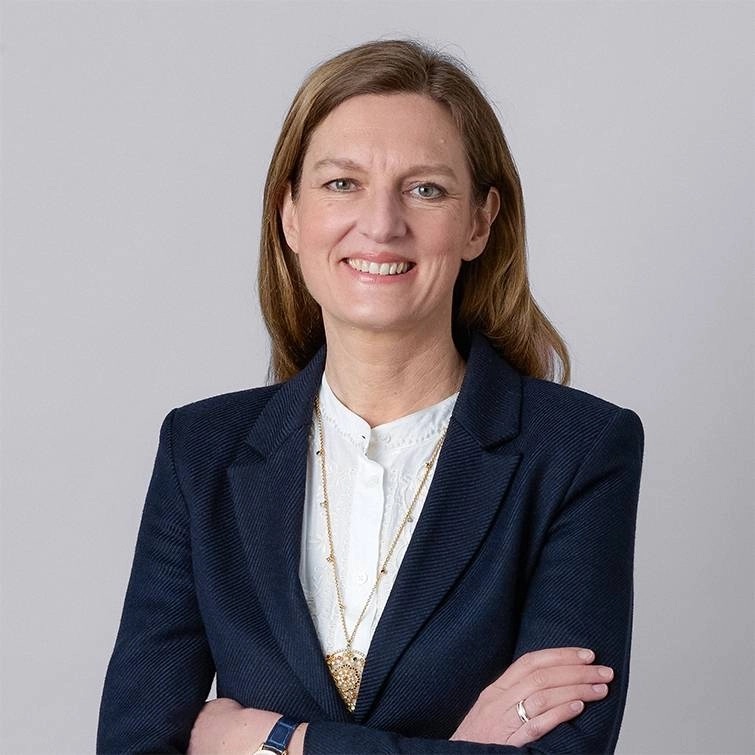
Agnès Paquin has been Chief Executive Officer of CNP Assurances IARD since 2022. She joined the CNP Assurances Group in 2019 as Technical Director of La Banque Postale’s Insurance division, where she was responsible for pricing, reserving, and reinsurance.

A graduate of ENSAE and a certified actuary, she previously spent over 20 years at Aviva (now Abeille Assurances), holding a wide range of senior roles across life, personal protection, property and casualty insurance, and asset management. Her positions included Technical and Underwriting Director, Finance/Actuarial Director, Head of Life and Personal Protection Customer Services, and Chief Development Officer at Aviva Investors. Earlier in her career, she worked as an actuary at GAN, monitoring the group’s English-speaking subsidiaries.


About CNP Assurances

CNP Assurances is a leading European insurer with a strong public-banking backbone through La Banque Postale. Its business is built around long-term partnerships rather than short-term distribution plays—a model that has delivered scale, stability, and trust across markets.

The group focuses on personal protection and savings: life, health, creditor insurance, and pension products that support people at critical moments in their lives. It holds a clear leadership position in creditor insurance in France and a strong presence across Europe, with Brazil as a key growth and profit engine in Latin America.

CNP serves 13 million customers worldwide in savings and pensions and 36 million in personal protection, combining reach with a disciplined, responsible approach to insurance and investment. Sustainability and inclusion are embedded in how the group allocates capital and designs products, not treated as add-ons.

Summary

CNP Assurances has navigated 25 years of digital revolutions, transforming insurance into a faster, more transparent, and customer-centered experience. As Agnès Paquin explains, “People can subscribe, sign, and pay their premiums remotely, in real time, whereas previously operations were asynchronous.” Looking forward, AI and data will streamline operations and personalize client interactions, without replacing the human expertise needed for complex risks.

Questions from Marcin Pluta, co-founder of Sollers Consulting,
to Agnès Paquin, CEO of CNP Assurances

Marcin Pluta: The Last 25 Years: What have been the most important technological developments in the insurance sector over the past 25 years, and how have they impacted CNP Assurances activities?

Agnès PaquinSince the 2000s, we have experienced revolutions that have completely transformed the way we operate and the speed at which we do so. People can subscribe, sign, and pay their premiums remotely, in real time, whereas previously operations were asynchronous. Enormous amounts of data are now stored and shared.

In practice, this has significantly accelerated the administrative management of insurance contracts and has increased client involvement. These trends have pushed us to provide understandable and efficient customer journeys through digital channels. Insurance has had to simplify and become more accessible. New players, specialized in customer journeys, have emerged and disrupted distribution methods. The ability to track interactions with clients and identify them has also reinforced regulatory requirements regarding customer knowledge, client protection, and advisory obligations, because technology now makes these feasible. Employment in insurance has not decreased; on the contrary, it has shifted from operational roles to more technological and strategic positions.
"As insurers, we also need stability and clarity to operate—secondary to public authorities—to cover risks that can be anticipated. We therefore play a role as an economic and social stabilizer."

Marcin Pluta: Current Challenges: The world is currently facing numerous geopolitical, economic, and environmental challenges. Which do you consider the most important from your perspective, and how do you address them?

Agnès PaquinThere are indeed many areas of concern… Geopolitical challenges are probably the most sensitive, as it is easier to create growth in a stable and predictable environment, and even more so to maintain a long-term vision, which is required for environmental issues.

As insurers, we also need stability and clarity to operate—secondary to public authorities—to cover risks that can be anticipated. We therefore play a role as an economic and social stabilizer.

We are part of the CNP Assurances group, whose purpose guides strategic decisions and actions. CNP Assurances has defined commitments to its stakeholders: clients, employees, partners, shareholders and investors, as well as the planet and society. These commitments are broken down into concrete objectives measured by quantifiable indicators.

Through these coordinated actions, consistent with those of our shareholder La Banque Postale, we can contribute to the stability we mentioned.

Marcin Pluta: The Next 25 Years: What changes will have the greatest impact on the insurance sector in the future? What do you expect for CNP Assurance’s activities? What role will technological developments such as AI, IoT, quantum computing, etc., play?

Agnès Paquin: Data and AI—which are closely linked—are currently transforming us significantly and will continue to disrupt our historical models.

AI is changing the way we work and will push us to do even more. P&C insurance still requires significant human intervention at various levels of expertise. I believe AI will lead us toward more automation and systematization and will impact the nature of jobs.

Regarding value propositions, I don’t think they will drastically change for mass-market products. However, AI will enable faster handling of client requests, higher-quality responses, and answers better tailored to individual situations. When compensation is financial, payments will be faster; when repair is required, we will still need to wait for a garage or contractor.

Regarding the Internet of Things, this is mainly relevant for Auto insurance, with data held by car manufacturers, who could potentially become insurers themselves in the long term. However, significant challenges remain in balancing competitiveness with a viable economic model for manufacturers (whose profit margins on spare parts remain a substantial source of revenue).

"I believe AI will lead us toward more automation and systematization and will impact the nature of jobs."

Marcin Pluta: Societal Role of Insurance: With the increase in climate events and insurers’ societal initiatives, insurance is becoming a pillar of social resilience. On which areas is your company focusing its societal impact? What major initiatives are planned for the coming months and years?

Agnès Paquin: In France, the vast majority of households (over 95%) insure their homes. Insurance against climate events—whether natural disasters or not—is systematically included. We must maintain this protective system, which relies on risk pooling, notably through the natural disaster compensation scheme.

With data on the risks each client faces, we can carry out information and prevention actions aligned with local public authority measures. Through risk prevention plans, municipalities are called upon to secure residents, propose works (some financed by the Barnier Fund for the most exposed homes).

We communicate with our clients to remind them of preventive measures in case of minor floods (elevating furniture, protecting outlets, installing barriers). We also act to prevent drought-related damage, for example by maintaining water drainage systems or irrigating soil to reduce clay shrinkage and swelling.

We plan to intensify these prevention communications in the coming years.

Marcin Pluta: Insurers & Customer Expectations: Customer expectations are evolving rapidly: speed, personalization, and competitive pricing. What are the main challenges for your model (direct insurance, bancassurance, network)? In your view, what constitutes a successful customer experience in this context?

Agnès Paquin: The challenge for a bancassurer is to design products that can be marketed simply and efficiently. Bank advisors have a wide range of products to offer clients. They need to present them clearly, highlight the main coverages, and then hand over to us for the next steps.

For personal insurance, this works well, and bancassurance figures prove it: Auto insurance contracts are quite similar, as are home insurance contracts, which cover the main risks in vehicles or homes. We cannot offer fully customized insurance; we offer plans that meet 95% of practical needs.

Once a contract is in place, we are the main point of contact for clients, especially in the event of claims. As you noted, the markets we operate in are highly competitive. We must therefore control costs and operate industrially: provide standard processes for mass claims, continuously adapt processes, and carefully manage complex claims, such as serious bodily injury or destructive fires.

A successful customer experience is a contract for which the client has been compensated in a reasonable timeframe, proportional to the nature of the damage, with clear answers to their questions.

CEO Voices Interviews

CEO Voices CEO Voices – Interview with Agnès Paquin, CEO of CNP Assurances
CEO Voices CEO Voices – Interview with Isabelle Le Bot CEO of La France Mutualiste
Shinichiro-Funabiki-ms&ad
CEO Voices CEO Voices – Interview with Shinichiro Funabiki, Representative Director, President...
marcus-ryu-guidewire-ceo
CEO Voices CEO Voices – Interview with Marcus Ryu, co-founder and former CEO of Guidewire Soft...
ken-norgrove-intact-insurance
CEO Voices CEO Voices – Interview with Ken Norgrove, CEO of Intact Insurance UK&I
AI, CEO Voices CEO Voices – Interview with Jean-Daniel Laffely, CEO of the Vaudoise Insurance Grou...
AI, CEO Voices CEO Voices – Interview with Simon Wilson, CEO of Markel Insurance
andrew horton
AI, CEO Voices CEO Voices – Interview with Andrew Horton, CEO of QBE
dr Frank Walthes interview pic
AI, CEO Voices CEO Voices – Interview with Prof. Dr. Frank Walthes

Share Your thoughts

Michał Trochimczuk
Michał Trochimczuk
President